
By CryptoNewsHub Staff | November 8, 2025 – 10:51am CET | Estimated Read Time: 2 Minutes
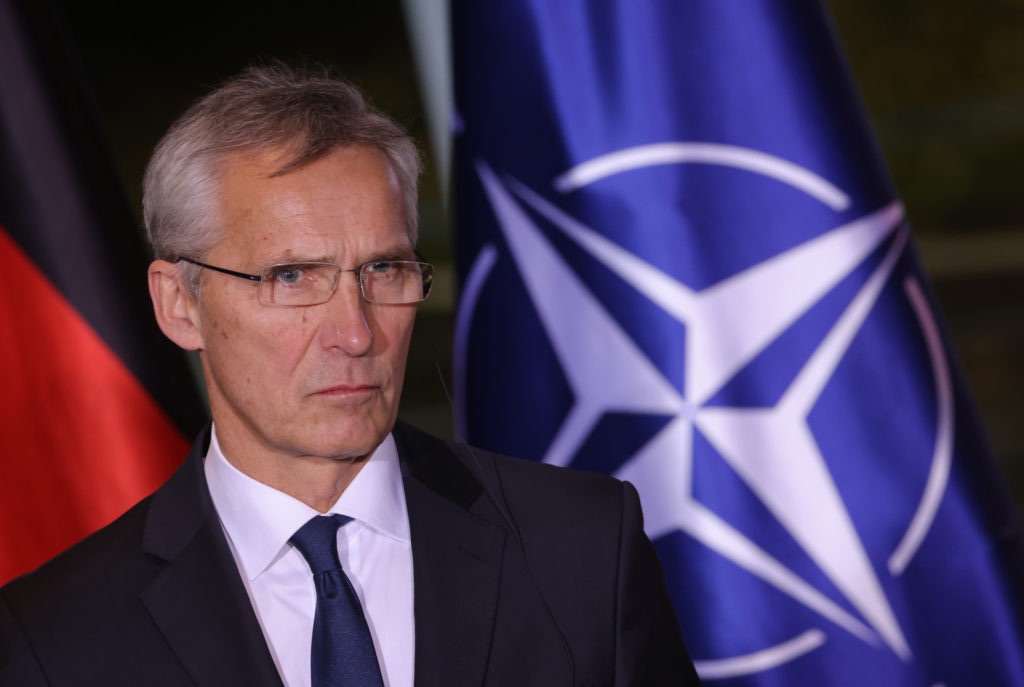
In one of his clearest remarks since leaving office, former NATO Secretary-General Jens Stoltenberg has warned that the alliance will not take steps that could plunge Europe into a direct confrontation with Russia. Speaking to Norwegian broadcaster NRK, Stoltenberg said NATO’s restraint is a deliberate decision aimed at preventing a “full-fledged war between NATO and Russia.”
“We understand the desperation,” Stoltenberg said. “But if we enforced a no-fly zone over Ukraine, we would end up with something that could lead to a full-fledged war in Europe—more countries involved, and much more suffering.”
NATO Draws a Red Line
According to Stoltenberg, enforcing a no-fly zone would require NATO pilots to enter Ukrainian airspace and engage Russian aircraft or destroy air defense systems inside Russia and Belarus. Such action, he explained, would mean direct military confrontation—a scenario NATO has been determined to avoid since Russia’s invasion began in 2022.
His comments echo NATO’s longstanding position, reaffirmed repeatedly by alliance leaders: support Ukraine militarily, but avoid direct involvement in the fighting. That support includes training Ukrainian forces, providing advanced weapons, and tightening economic sanctions on Moscow, but stops short of deploying NATO combat troops or aircraft.
Balancing Support and Escalation
The debate over a no-fly zone has been a recurring point of tension between Kyiv and NATO capitals. Ukrainian President Volodymyr Zelenskyy has long argued that enforcing such a zone could save thousands of civilian lives. Yet Western officials maintain that it could also ignite a catastrophic war between nuclear-armed powers.
“We are fully committed to Ukraine’s sovereignty,” Stoltenberg added. “But we must also prevent this war from spreading beyond Ukraine’s borders.”
Analysts say Stoltenberg’s warning comes amid renewed pressure on NATO to step up its role as Russian missile and drone attacks continue to devastate Ukrainian infrastructure. The alliance, however, remains cautious.
The Strategic Reality
Stoltenberg’s remarks underline a central dilemma for NATO policymakers: how to keep supporting Ukraine while avoiding direct confrontation with Moscow. His words also serve as a reminder that the alliance’s mission, from the start, has been deterrence—not escalation.
As NATO weighs expanding its long-range support and defense capabilities, the question remains whether growing Russian aggression could eventually force a shift in strategy.
For now, Stoltenberg’s stance is unmistakable: NATO will stand by Ukraine, but not at the cost of global war.
© 2025 CryptoNewsHub. All rights reserved.
Written for CryptoNewsHub — delivering accurate, ad-free coverage of global politics and security developments.
 CryptoNewsHub
Leave a comment