
By Laurenz Van de Sande — CryptoNewsHub
London, United Kingdom — November 3, 2025 | 06:34pm CET
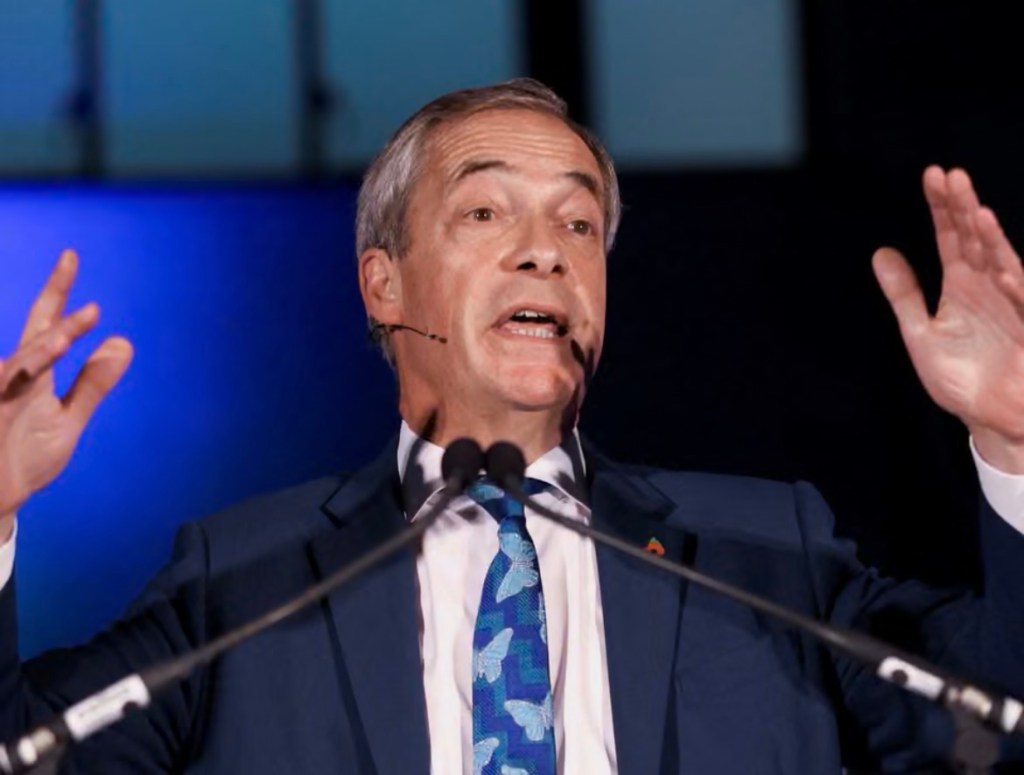
Reform UK leader Nigel Farage has laid out his most detailed explanation yet of what Britain’s economic direction could look like under his leadership — touching on taxes, welfare, wages, pensions, energy, and diversity.
While the speech introduced few new pledges, it offered the clearest signal yet of how Farage envisions a post-Labour economic order — one defined by fiscal restraint, deregulation, and open criticism of “net zero” and diversity initiatives.
Below are six key takeaways from his remarks.
1. Tax Cuts — But Not Just Yet
Farage’s once-flagship proposal to raise the income tax threshold from £12,570 to £20,000 — a move that would lift many low earners out of tax entirely — appears to have been quietly rolled back.
“Of course, I would want a £20,000 threshold,” Farage said when pressed after the speech, “but that’s an aspiration, not a promise.”
Raising the threshold would cost more than £40 billion a year, and Farage conceded that “it’s impossible to know what state the economy will be in by the time of the next election.”
The one firm tax commitment he offered was to reverse Labour’s inheritance tax changes on farms, calling them “an attack on family businesses and rural Britain.”
Economists note that while such tax cuts appeal politically, they primarily benefit higher-income earners.
“Raising the threshold sounds generous, but the cost to the Treasury and skewed benefits make it difficult to justify,” said Dr. Elaine Murray, a senior economist at the Institute for Fiscal Studies (IFS).
2. Welfare, Wages, and Pensions
Reform UK has proposed cutting £9 billion annually by tightening eligibility for Personal Independence Payments (PIP) — benefits for people with long-term disabilities or mental health conditions.
However, when asked about removing the two-child benefit cap, Farage clarified that such changes would apply only to UK nationals where both parents work, limiting its reach considerably.
“We have to make work pay,” he said. “And that means benefits must support responsibility and contribution, not dependency.”
Farage also suggested that the minimum wage may be “too high for younger workers”, signaling potential reforms aimed at labor flexibility.
On pensions, he was deliberately vague — declining to commit to maintaining the triple lock, which guarantees annual increases in line with earnings, inflation, or 2.5%, whichever is highest.
“The triple lock is expensive. Everything’s on the table,” Farage said, leaving open the possibility of reform.
Economists suggest that softening the triple lock could save billions over time but risks alienating older voters, a key Reform constituency.
3. Courting the Rich and Entrepreneurs
Although Farage’s party brands itself as one for “working people and unions,” his latest speech devoted significant space to defending the wealthy and business owners.
“We’re driving our most successful people out,” Farage warned. “Entrepreneurs, investors, wealth creators — these people are a different breed. We should be cherishing them, not punishing them.”
Farage claimed that Britain’s tax environment is pushing young talent and high earners abroad, though analysts note that evidence for a mass exodus is limited.
“There’s always talk of flight, but the data doesn’t support it,” said Sarah Knowles, a policy researcher at the London School of Economics. “Still, Farage’s message plays well with business leaders frustrated by red tape.”
His focus on “the rich as vital to national prosperity” marks a shift away from Reform’s earlier populist tone, and toward a pro-enterprise, low-tax vision more reminiscent of 1980s Thatcherism.
4. Public Sector and Pension Reform
Farage’s comments on pensions hinted at a potential shake-up of public sector schemes. Asked if Reform might scrap defined benefit pensions for state workers, he avoided specifics, saying only that his party would reduce fees paid by councils to manage pension funds.
Deputy leader Richard Tice has previously floated similar ideas, advocating for greater efficiency in local government retirement schemes.
However, Labour’s ongoing effort to consolidate council pension schemes and lower administrative costs may undercut Reform’s platform before the next election.
“Labour’s already moving in that direction,” noted political economist James O’Connor. “By 2029, there may be little room for Farage to claim that ground.”
5. Energy, Fossil Fuels, and Net Zero
Farage used one of the longest portions of his speech to attack the UK’s net zero targets, calling them “lunacy.”
“This obsession with net zero is strangling our economy,” he said. “We will drill for oil and gas in the North Sea. We will put British energy independence first.”
He argued that expanding fossil fuel production would lower energy costs — a claim disputed by analysts who point out that global market prices, not domestic drilling, largely determine costs.
Despite this, his stance taps into widespread frustration over energy bills and government subsidies for green projects.
Polling, however, shows that most Britons still support climate goals, even if they worry about short-term costs.
“Net zero isn’t the political poison Farage thinks it is,” said environmental analyst Clara Bates. “But it’s a rallying cry for his base.”
6. Diversity, Inclusion, and Deregulation
In one of his more controversial moments, Farage derided what he called “the booming HR and compliance industry”, linking it to diversity and inclusion policies he says overburden British firms.
“When I worked in the City, it didn’t matter what religion you were, what class you were, or what colour you were — it was about whether you were good enough,” he recalled.
The Reform leader’s remarks echoed sentiments popular among segments of the British right, while critics argue they ignore systemic inequalities still present in workplaces.
“Farage’s nostalgia for a supposedly meritocratic City overlooks who actually got ahead back then,” said Professor Lorna Hughes of King’s College London.
His push to roll back regulation and streamline compliance laws signals a return to deregulation-heavy economics — one that could appeal to frustrated small business owners but alienate moderates wary of social regression.
Conclusion: A Vision Still in Flux
Farage’s economic blueprint remains a work in progress — equal parts populist rhetoric and Thatcherite revivalism. His speech offered more ideology than policy, and plenty of caveats about the uncertain future of the UK economy.
“We can’t promise what we can’t fund,” he said. “But we can promise that Britain will once again reward work, risk, and enterprise.”
As the next election approaches, Reform’s challenge will be to translate Farage’s broad strokes into credible fiscal plans — while balancing populist appeal with economic realism.
© 2025 CryptoNewsHub. All rights reserved
 CryptoNewsHub
Leave a comment