
By Laurenz Van de Sande — CryptoNewsHub
New York, United States — November 3, 2025 | 11:33pm CET
In a bold move that underscores the escalating arms race in artificial intelligence, OpenAI has signed a $38 billion, seven-year agreement with Amazon, securing massive computing power through the retail giant’s cloud arm, Amazon Web Services (AWS).
The deal, announced Monday, marks Amazon’s largest AI infrastructure investment to date — and comes just days after the company laid off 14,000 employees, a restructuring CEO Andy Jassy insists is “not AI-driven.”
A Landmark Partnership in the AI Race
Under the agreement, OpenAI will run its next generation of ChatGPT and foundation models on AWS infrastructure, leveraging thousands of Nvidia GPUs — including the forthcoming GB200 and GB300 accelerators — to handle both training and inference workloads.
The partnership represents a major boost for Amazon, whose investors have expressed concern that AWS was falling behind cloud rivals Microsoft Azure and Google Cloud in the AI infrastructure race.
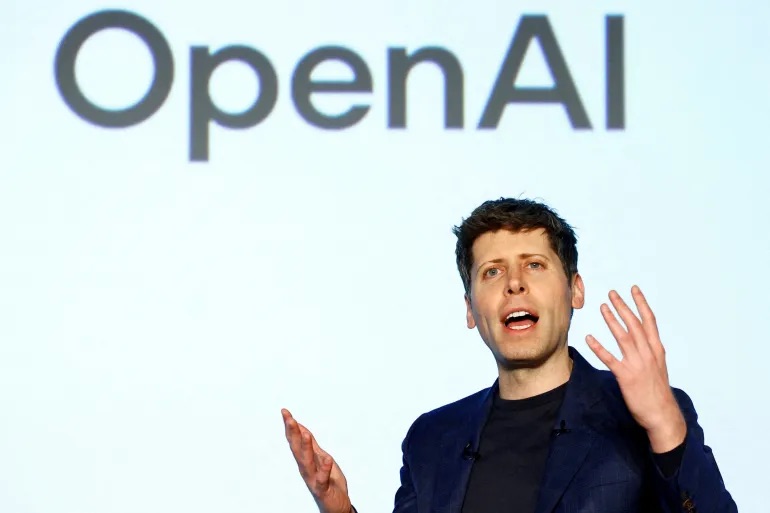
“Scaling frontier AI requires massive, reliable compute,” said OpenAI CEO Sam Altman. “Our partnership with AWS strengthens the broad compute ecosystem that will power this next era and bring advanced AI to everyone.”
According to the companies, OpenAI will begin using AWS immediately, with all computing capacity expected to be fully operational by the end of 2026, and options for expansion in 2027 and beyond.
Why It Matters for Amazon
For Amazon, the deal is a powerful vote of confidence in AWS’s capabilities after a turbulent year marked by layoffs and intense competition from Microsoft and Google.
Amazon’s cloud division, which contributes the largest share of its operating income, saw a rebound in the September quarter — a trend analysts believe this new partnership will accelerate.
“This agreement signals that AWS remains a critical player in AI infrastructure,” said Joshua McKenty, CEO of PolyguardAI. “It’s less about who builds the models and more about who powers them.”
McKenty clarified that the deal does not grant OpenAI access to AWS-hosted content, emphasizing that it’s “strictly about the economics of renting versus buying GPU capacity.”
Behind the Scenes: A Shift Away from Microsoft
The OpenAI-Amazon deal comes amid reports that OpenAI has been diversifying its partnerships, moving away from reliance on Microsoft, which invested billions in the company since 2019.
OpenAI’s recent restructuring removed Microsoft’s first right of refusal on future service agreements, paving the way for collaborations with other major tech providers.
Earlier this year, Reuters reported that OpenAI had also signed agreements with Google Cloud and purchased up to $300 billion worth of computing power over five years — highlighting the staggering financial scale of the AI boom.
“This is a diversification play,” noted Rachel Stokes, a senior analyst at Forrester Research. “OpenAI wants redundancy, flexibility, and leverage. No single cloud provider can meet their demand alone.”
Energy and Environmental Concerns Grow
As AI companies scale up their data centers, concerns about energy consumption and sustainability are mounting.
The Lawrence Berkeley National Laboratory estimates that AI data centers could consume up to 12% of U.S. electricity by 2028, up from less than 4% today.
An AP/NORC poll from October found that 71% of Americans are at least somewhat concerned about AI’s environmental impact.
“We’re facing a new industrial revolution in energy demand,” said Dr. Melissa Hargreaves, an energy systems researcher. “Every new AI model comes with a carbon cost — and society hasn’t caught up to that yet.”
OpenAI has said it intends to invest $1.4 trillion in developing 30 gigawatts of computing capacity, roughly equivalent to powering 25 million U.S. homes.
Layoffs and the Optics of Growth
The announcement comes just four days after Amazon cut 14,000 jobs, primarily in its logistics and retail divisions.
On an earnings call last week, CEO Andy Jassy stressed that the cuts were unrelated to AI or automation.
“The announcement that we made a few days ago was not really financially driven, and it’s not even really AI-driven, not right now at least,” Jassy said.
Still, critics argue that the optics are problematic: massive layoffs followed by a record-setting technology investment highlight the tensions between human jobs and machine-driven productivity.
“It’s the perfect metaphor for the AI economy,” said labor economist Darren Pike. “Billions for machines, pink slips for people.”
The Bubble Question
OpenAI’s spending spree — now exceeding $1 trillion in infrastructure commitments — has reignited talk of an AI investment bubble.
Tech stocks have surged throughout 2025, driven by enthusiasm over AI, but some analysts warn that the industry’s runaway valuations and capital intensity mirror the early-2000s dot-com boom.
“The AI sector has entered its speculative phase,” said Claudia Romero, chief strategist at Morgan Street Capital. “There’s immense innovation, but also immense risk. A correction is inevitable if returns don’t materialize quickly.”
Despite those warnings, Wall Street reacted positively to the announcement. Amazon’s shares rose 4.7% to $184.52 as of 11:15 a.m. ET (16:15 GMT), signaling renewed investor confidence in AWS’s future.
The Bottom Line
The OpenAI-Amazon partnership represents a defining moment in the AI arms race — one that blurs the line between competitors and collaborators in the cloud industry.
While OpenAI continues to expand across multiple providers, Amazon’s newfound role as a core infrastructure partner ensures it remains central to the next phase of AI development.
As Altman put it:
“AI won’t just change how people work — it will change the very infrastructure of the internet itself.”
© 2025 CryptoNewsHub. All rights reserved.
 CryptoNewsHub
Leave a comment