
By Laurenz VDS | CryptoNewsHub
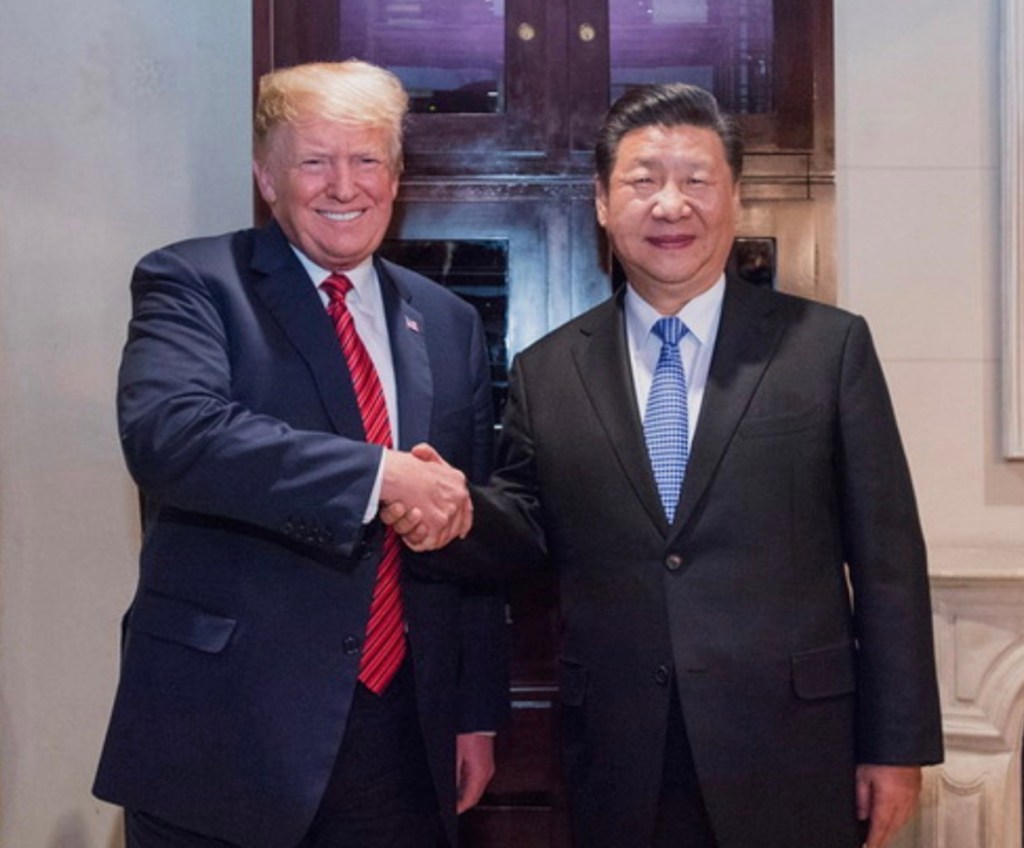
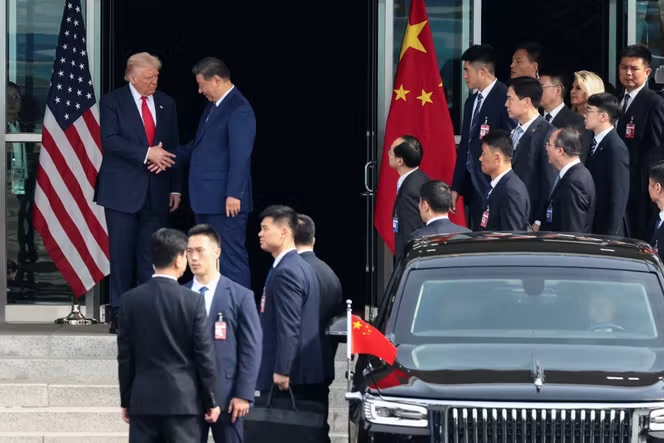
On October 30, U.S. President Donald Trump confirmed that he had discussed semiconductor access with Chinese President Xi Jinping during their recent meeting, but stressed that Nvidia Corp.’s most advanced AI chips, the Blackwell series, were not part of the conversation.
Trump’s comments, made aboard Air Force One, come amid heightened scrutiny of high-performance AI chips and their potential impact on U.S. national security. The president said the discussions were broader in nature, focusing on Nvidia’s access to the Chinese market rather than specific approval of Blackwell chip exports. “We did discuss chips,” Trump told reporters. “They’re going to be talking to Nvidia and others about taking chips. But we’re not talking about the Blackwell.”
Earlier this year, Trump had suggested that downgraded versions of the Blackwell chips might be exported to China, fueling speculation among investors that Washington might ease restrictions on the semiconductor giant. The clarification that Blackwell chips remain off-limits caused Nvidia shares to dip roughly 2% in early trading on Wednesday.
The U.S. government has imposed strict export controls on advanced AI chips over concerns that they could provide Beijing with a military advantage. While downgraded versions of Nvidia’s H20 processors received U.S. licenses for limited export earlier this year, Chinese regulators have actively discouraged domestic firms from purchasing them.
Nvidia’s new Blackwell series significantly outperforms the processors banned from export to China in 2022. However, the company has not published detailed specifications or formally requested export approval for these chips, leaving the future of Blackwell in China uncertain.
Financial implications have already followed. CEO Jensen Huang previously stated that China blocked shipments of licensed chips, causing adjustments in forecasts and writedowns. In response, President Trump proposed a 15% revenue cut on Nvidia as part of broader trade policy discussions.
Access to China is strategically important for Nvidia. As Huang noted in May, “With half of the world’s AI researchers based there, the platform that wins China is positioned to lead globally.” The company’s upcoming earnings report, scheduled for November 11, will be closely watched to gauge the recovery of Nvidia’s China business, though current projections of $54 billion in sales do not include any shipments of the H20 processor for the last quarter.
Despite geopolitical uncertainty, Nvidia’s long-term prospects remain strong. Orders for the Blackwell and Rubin series have reportedly exceeded $500 billion through 2026, underscoring robust global demand for high-performance AI chips.
Analysts say the meeting between Trump and Xi reflects a careful balancing act. While the U.S. seeks to maintain technological leadership and prevent military applications in China, there is also recognition of the economic importance of the Chinese market for American semiconductor companies. As Trump emphasized, the talks were intended to facilitate dialogue, not to approve the most advanced exports.
For Nvidia and the broader semiconductor industry, the message is clear: access to China remains complicated, with regulatory, political, and technological hurdles still firmly in place. The coming months will be crucial in determining whether U.S. policy shifts or Nvidia’s negotiations can unlock further opportunities in the world’s largest market for AI research and development.
Tags: #Nvidia #AIChips #Blackwell #Trump #XiJinping #Semiconductors #China #CryptoNewsHub
© 2025 CryptoNewsHub. All rights reserved.
 CryptoNewsHub
Leave a comment