
By laurenz van de sande | August 13, 2025
Trading—whether in stocks, forex, commodities, or cryptocurrency—can open doors to financial growth. But here’s the catch: without a clear plan, discipline, and proper knowledge, those doors can slam shut just as quickly.
If you’re just getting started, the secret isn’t a “magic indicator” or following the loudest voice on social media—it’s about building a foundation, managing risk, and controlling your emotions.
This guide will walk you through the key steps to start trading like a pro—and the most common traps you’ll want to avoid.
1. Build Your Foundation: Learn Before You Trade
Jumping into trading without preparation is like sailing without a compass—you might move, but not in the direction you want.
📚 Learn the Basics:
Market Types: Each—stocks, forex, commodities, crypto—behaves differently. Core Terms: Liquidity, volatility, leverage, market orders. Trading Styles: Day trading vs. swing trading vs. long-term investing.
💡 Expert Tip
“Most beginners lose because they don’t understand how markets actually work. Study first—trade later.”
— Jane Doe, CFA
Recommended Learning Tools:
Books: The Intelligent Investor (Benjamin Graham), Market Wizards (Jack Schwager) Courses: Financial Markets (Yale via Coursera), Investopedia Academy Free Practice: TradingView charts, demo accounts from regulated brokers
2. Pick the Right Broker and Platform
Your broker isn’t just where you place trades—it’s your main trading environment.
Checklist for Choosing Wisely:
✅ Regulation: SEC, FCA, CySEC—never skip this. ✅ Fees: Spreads, commissions, withdrawal costs. ✅ Platform Quality: MetaTrader, ThinkorSwim, Interactive Brokers.
💡 Pro Tip: Start with a demo account to test strategies before risking real money.
3. Start Small & Master Risk Management
The fastest way to drain a trading account? Taking on too much risk too soon.
Golden Rules:
Trade with money you can afford to lose. Risk only 1–2% of your capital per trade. Always use stop-loss orders to limit losses.
📊 Fact: A 2024 eToro report found traders who used stop-loss orders survived 23% longer than those who didn’t.
4. Create and Stick to a Trading Plan
A plan keeps your trades disciplined instead of emotional.
Include in Your Plan:
🎯 Goals: Short-term income or long-term growth? ⏳ Entry/Exit Rules: Based on technical or fundamental analysis. 📏 Risk-Reward: Aim for at least 1:2 payoff.
Example: “Trade Nasdaq 100 stocks in the first two market hours, max 1.5% risk per trade.”
5. Master Emotional Control
In trading, your worst enemy often stares at you from the mirror.
Avoid These Traps:
❌ FOMO: Buying at peaks out of fear of missing out. ❌ Revenge Trading: Chasing losses with bigger bets. ❌ Overconfidence: A winning streak ≠ guaranteed future success.
📊 Data: A 2023 Fidelity study found 68% of retail trading losses were linked to emotional decisions.
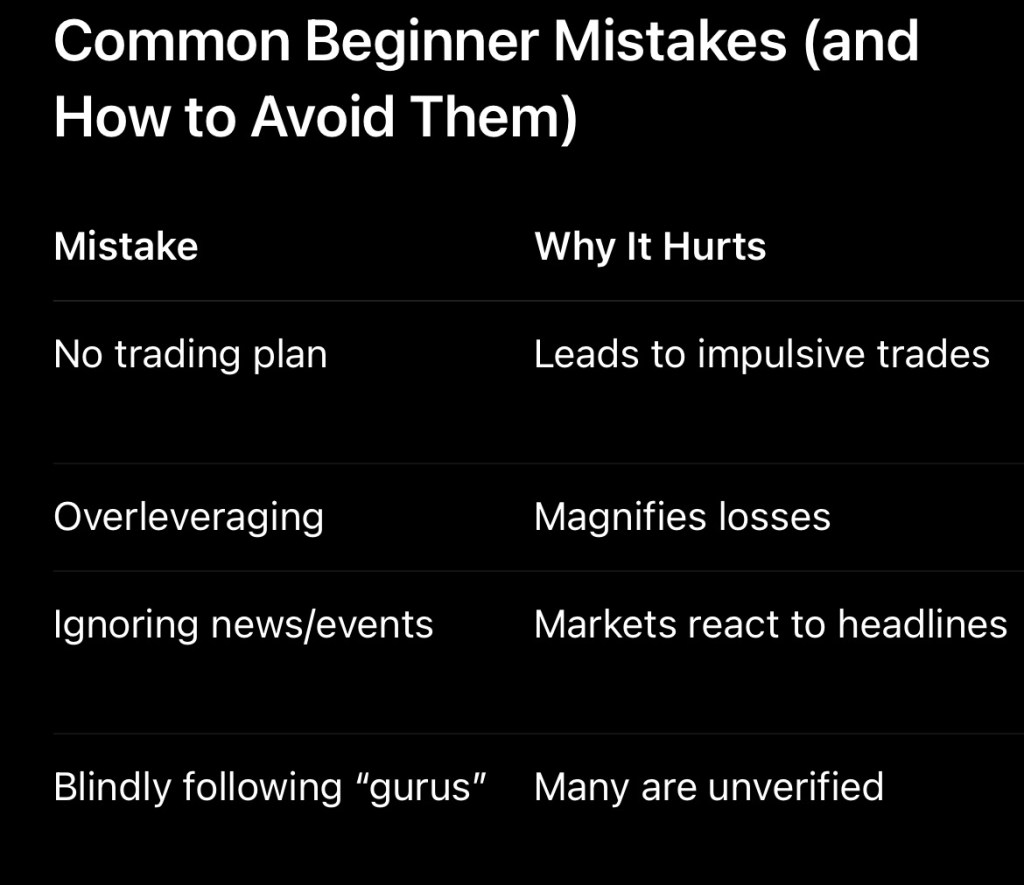
Your Long-Term Edge: Patience & Practice
Trading isn’t a get-rich-quick scheme—it’s a skill that compounds over years.
Your Next Steps:
Paper trade for 3–6 months. Keep a trading journal to spot winning patterns. Join trading communities (e.g., Reddit’s r/DayTrading, TradingView forums).
📝 Final Thought: “The market doesn’t reward effort—it rewards correctness.”
About the Author: Laurenz van de sandeis a financial analyst and trader with [X] years of experience. Follow for weekly market insights on https://x.com/shibe_gold.
 CryptoNewsHub
Leave a comment